Australia · due 28 August
Do you have to lodge a TPAR?
The ATO’s 10% test, applied properly — including the building and construction carve-out that makes the test irrelevant, and the two services that have to be added together first.
Checked against the legislation — how we check.
Relevant services, as a share of income
15.0%
Ten per cent or more of your business income is from relevant services, and you pay contractors for them.
The answer
This answers whether you lodge, not what goes in the report. It does not cover government entities, which have their own obligations. General information, not tax advice.
The five services inside the system
The taxable payments reporting system covers payments to contractors for these services. If your business provides one of them and pays contractors to deliver it, a report may be due.
| Service | Subject to the 10% test? |
|---|---|
| Building and construction | No — you lodge regardless of the share |
| Cleaning | Yes |
| Courier and road freight | Yes |
| Information technology | Yes |
| Security, investigation or surveillance | Yes |
Two rules that reverse the answer
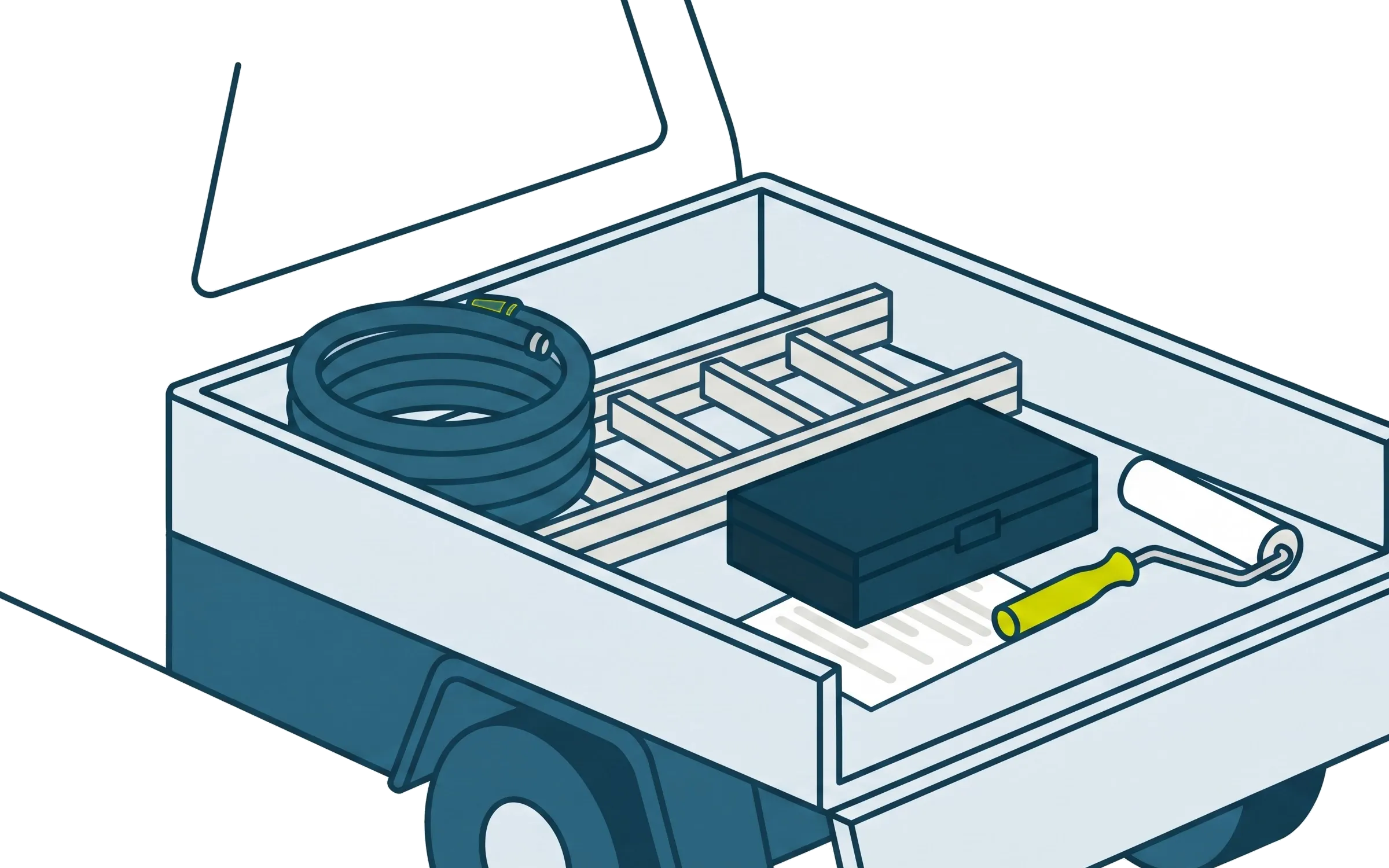
Building and construction is outside the 10% test. The ATO says it directly: the percentage calculation “doesn’t apply to building and construction services you provide”. So a builder who pays contractors lodges a TPAR whatever proportion of income that work represents. Run the percentage test over a building business and it will hand you a confident “no” that is wrong.
Courier and road freight are combined. If you provide both, the payments for both are added together before the test is applied. Assessed separately each might sit under ten per cent while the combination clears it — which is precisely why the ATO combines them.
Which direction the test runs
This is the part that gets inverted. The 10% test looks at the payments your business received for relevant services, against your business income. It is not about how much you paid contractors. What you paid contractors is what you report, once the test has put you inside the system.
The ATO’s own steps: add up the payments received for each relevant service during the year, including payments received where employees or contractors performed the work on your behalf; take your business income for the year, or your projected income if you have been trading under twelve months; then divide the first by the second and multiply by a hundred.
28 August, and the 2027 Saturday
A TPAR is due by 28 August each year, for the financial year that ended the previous 30 June. In 2026 that is a Friday. In 2027 it falls on a Saturday.
Lodgment dates that land on a weekend generally move to the next business day, but the ATO states that rule on its activity statement pages rather than its TPAR pages, so this site will not assert it for this form. Treat the Saturday as a reason to lodge in the week before rather than as an extra weekend you have been granted. The BAS due dates page covers the rollover rule where it is stated.
Frequently asked questions
When is the TPAR due?
Which industries have to lodge a TPAR?
How does the 10% test work?
I’m a builder. Do I still apply the 10% test?
I do a bit of courier work and a bit of freight. Are they separate?
What goes in the report?
What this page does not do
Sources
| What it decides | Source | Updated |
|---|---|---|
| The five TPRS services, the 10% test and its steps, the building carve-out, and combining courier with road freight | ATO — Work out if you need to lodge a TPAR (QC55378) | 2024-04-23 |
| The 28 August due date, and who counts as a contractor | ATO — Taxable payments annual report (QC32057) | 2022-03-14 |